
dobsontom/dbt-ft.nvim
 github
 3
 0
 0
 0
dbt-ft.nvim
A Jinja-aware filetype for dbt models in Neovim.
Neovim opens dbt models as plain SQL, so the SQL parser trips over every {{ ref() }} and none of
the Jinja is highlighted. dbt-ft.nvim gives models their own dbt filetype, which Tree-sitter
parses as Jinja with the SQL between the tags handed to the SQL parser. Highlighting, folding, and
indenting then understand both languages, and a dbt buffer still gets what Neovim gives a sql
buffer.
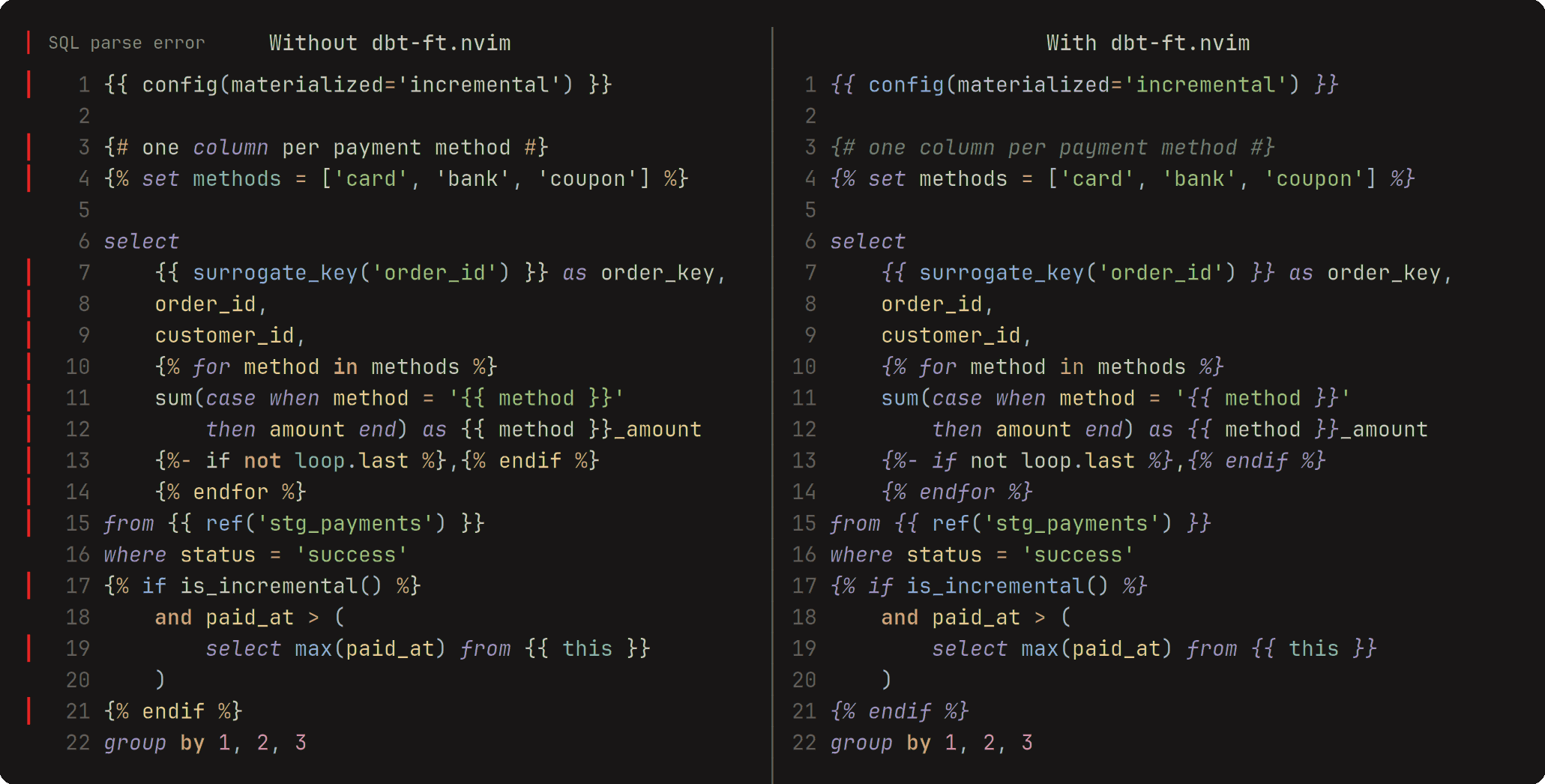
There are no commands, options, or setup function.
Features
.sqlfiles in a dbt project become filetypedbt, except dbt's compiled output intarget/.- The text between Jinja tags and each
{{ }}expression go to the SQL parser as one document, sofrom {{ ref('orders') }} whereparses as SQL. - Jinja blocks fold, and SQL keeps its Tree-sitter folds and indents.
gcuses{# #}on a line that starts with a Jinja tag, indented or not, and--elsewhere.- With matchit,
%moves between Jinja block tags.
See :help dbt-ft for details and limitations.
Requirements
- Neovim 0.12 or later
- The
jinja,jinja_inline, andsqlTree-sitter parsers, for example from nvim-treesitter with:TSInstall jinja jinja_inline sql
Installation
With vim.pack:
vim.pack.add({ "https://github.com/dobsontom/dbt-ft.nvim" })
With lazy.nvim:
{ "dobsontom/dbt-ft.nvim" }
LazyVim starts Tree-sitter for dbt buffers by itself. If your config starts it for a list of
filetypes, add dbt to the list.
Language servers, formatters, and linters set up for sql don't run on dbt buffers, which keeps
the ones that can't read Jinja off your models. Add dbt to those that can, such as the dbt
language server (dbt lsp, from dbt v2):
vim.lsp.config("dbt", { filetypes = { "sql", "dbt" } })
Then run :checkhealth dbt-ft.